• TABLE OF CONTENT
    • the dreaming machine – issue number 17
    • the dreaming machine – issue number 16
    • the dreaming machine – issue number 15
    • the dreaming machine – issue number 14
    • the dreaming machine – issue number 13
    • the dreaming machine – issue number 12
    • The dreaming machine – issue number 11
    • The dreaming machine – issue number 10
    • The dreaming machine – issue number 9
    • The dreaming machine – issue number 8
    • The dreaming machine – issue number 7
    • The dreaming machine – issue number 6
    • The dreaming machine – issue number 5
    • The dreaming machine – issue number 4
    • The dreaming machine – issue number 3
    • The dreaming machine – issue number 2
    • The dreaming machine – issue number 1
  • THE DREAMING MACHINE
    • The dreaming machine n 17
    • The dreaming machine n 16
    • The dreaming machine n 15
    • The dreaming machine n 14
    • The dreaming machine n 13
    • The dreaming machine n 12
    • The dreaming machine n 11
    • The dreaming machine n 10
    • The dreaming machine n 9
    • The dreaming machine n 8
    • The dreaming machine n 7
    • The dreaming machine n 6
    • The dreaming machine n 5
    • The dreaming machine n 4
    • The dreaming machine n 3
    • The dreaming machine n 2
    • The dreaming machine n 1
  • CONTACT
No Result
View All Result
The Dreaming Machine
  • Home
  • Poetry
    Like a Dream Spinning Out of Control – Poems by Nina Sadeghi

    In memoriam: Elsa Mathews

    Imaginary Poets Boghos Üryanzade and The Pseudo-Melkon. From Neil P. Doherty’s The Stony Guests

    Under Regime and Other Stories – Gerald Fleming

    Kneading Language And Feelings in Palermo – Gianluca Asmundo’s Marionette Theater Poems

    Kneading Language And Feelings in Palermo – Gianluca Asmundo’s Marionette Theater Poems

    As a Lonely Boat Rushes Into a Storm: Selected Poems by Ndue Ukaj

    As a Lonely Boat Rushes Into a Storm: Selected Poems by Ndue Ukaj

    Like a Dream Spinning Out of Control – Poems by Nina Sadeghi

    Interview with a Clothesline and Other Poems – Nina Lindsay

    (Their) STORY (is Ours) – séamas carraher

    Triptychs of Nocturnal Souls and Oceans – Malika Afilal

  • Fiction
    SKY – Julio Monteiro Martins

    SKY – Julio Monteiro Martins

    Turning Shell Casings Into Angels – Mihaela Šuman’s Gaza Project

    Excerpt from the novel “Ardesia” – Ruska Jorjoliani

    (Their) STORY (is Ours) – séamas carraher

    Hope, People and a Tale of Fire – Prabuddha Ghosh, with a translator’s note by Rituparna Mukherjee

    Trimohinee, Chapter One – Kazi Rafi

    Trimohinee, Chapter One – Kazi Rafi

    (Their) STORY (is Ours) – séamas carraher

    MIST IS A HOME’S VEST – Kabir Deb

    (Their) STORY (is Ours) – séamas carraher

    An Hour Before – Appadurai Muttulingam

    (Their) STORY (is Ours) – séamas carraher

    Five Short Pieces from Being Somebody Else – Lynne Knight

    As my eye meanders in nature – Photographs by Susan Aberg

    A Gilded Cage – Haroonuzzaman

    The Spanish Steps, Revisited: A Temporary Exhibition – A conversation with Sheila Pepe

    The Importance of Being Imperfect – Haroonuzzaman

  • Non Fiction
    (Their) STORY (is Ours) – séamas carraher

    Identity, Language and Nationalism in Spain and the U.S. – Clark Bouwman

    (Their) STORY (is Ours) – séamas carraher

    Excess of Presence: Surveillance, Seizure, and Detention in Latine/a Literature & Film – Edward Avila

    Brokering The Link: In the Shadow of Many Mothers – Farah Ahamed 

    Brokering The Link: In the Shadow of Many Mothers – Farah Ahamed 

    Urban Alienation: Dhaka Through Literary Lenses – Haroonuzzaman

    Urban Alienation: Dhaka Through Literary Lenses – Haroonuzzaman

    I AM STILL HERE: It’s not a movie, it’s a hymn to democracy – Loretta Emiri

    I AM STILL HERE: It’s not a movie, it’s a hymn to democracy – Loretta Emiri

    Requiem for a Mattanza – Gia Marie Amella

    Requiem for a Mattanza – Gia Marie Amella

  • Interviews & reviews
    Sicilian Interviews: Nino Alba and the problem of the land – Gia Marie Amella

    Sicilian Interviews: Nino Alba and the problem of the land – Gia Marie Amella

    FROM VENICE TO AN ACADEMY AWARDS NOMINATION: ON  FRED KUDJO KUWORNU’S BLACK RENAISSANCE – Reginaldo Cerolini

    FROM VENICE TO AN ACADEMY AWARDS NOMINATION: ON FRED KUDJO KUWORNU’S BLACK RENAISSANCE – Reginaldo Cerolini

    Pulsing beneath the soil of Bengal -Review of Kazi Rafi’s novel Trimohinee – Nadira Bhabna

    Pulsing beneath the soil of Bengal -Review of Kazi Rafi’s novel Trimohinee – Nadira Bhabna

    Turning Shell Casings Into Angels – Mihaela Šuman’s Gaza Project

    Turning Shell Casings Into Angels – Mihaela Šuman’s Gaza Project

    (Their) STORY (is Ours) – séamas carraher

    History Goes On, Let’s Stop and Breathe – Kithamerini interviews Tanya Maliarchuk

    Zarina Zabrisky’s KHERSON: HUMAN SAFARI, review by Pina Piccolo

    Zarina Zabrisky’s KHERSON: HUMAN SAFARI, review by Pina Piccolo

  • Out of bounds
    • All
    • Fiction
    • Intersections
    • Interviews and reviews
    • Non fiction
    • Poetry
    (Their) STORY (is Ours) – séamas carraher

    Movement Class at the Holistic Institute – Carolyn Miller

    (Their) STORY (is Ours) – séamas carraher

    (Their) STORY (is Ours) – séamas carraher

    (Their) STORY (is Ours) – séamas carraher

    Surveillance & Seizure under the Bio/Necropolitical (B)order of Power – Edward Avila

    I WOULD HAVE LIKED TO BE PATTI SMITH – Pina Piccolo

    I WOULD HAVE LIKED TO BE PATTI SMITH – Pina Piccolo

    Stefan Reiterer at Museum gegenstandsfreier Kunst – Camilla Boemio

    In-Flight – Clark Bouwman

    a pile of my dream notes (excerpted) – Andrew Choate

    a pile of my dream notes (excerpted) – Andrew Choate

    This Page Is An Occupied Territory – Adeena Karasick and Warren Lehrer

    This Page Is An Occupied Territory – Adeena Karasick and Warren Lehrer

    A Few Beasts from Brenda Porster’s Bilingual Collection ” La bambina e le bestie”

    A Few Beasts from Brenda Porster’s Bilingual Collection ” La bambina e le bestie”

    As my eye meanders in nature – Photographs by Susan Aberg

    In Defence of Disorder – Haroonuzzaman

  • News
    Waiting for Palms. A conversation with Peter Ydeen – Camilla Boemio

    WAITING FOR PALMS, Peter Ydeen at Lisi Gallery in Rome, through December 19

    Memorial Reading Marathon for Julio Monteiro Martins, Dec. 27, zoom live

    Memorial Reading Marathon for Julio Monteiro Martins, Dec. 27, zoom live

    PER/FORMATIVE CITIES

    PER/FORMATIVE CITIES

    HAIR IN THE WIND – Calling on poets to join international project in solidarity with the women of Iran

    HAIR IN THE WIND – Calling on poets to join international project in solidarity with the women of Iran

    THE DREAMING MACHINE ISSUE N. 11 WILL BE OUT ON DEC. 10

    THE DREAMING MACHINE ISSUE N. 11 WILL BE OUT ON DEC. 10

    RUCKSACK – GLOBAL POETRY PATCHWORK PROJECT

    RUCKSACK – GLOBAL POETRY PATCHWORK PROJECT

  • Home
  • Poetry
    Like a Dream Spinning Out of Control – Poems by Nina Sadeghi

    In memoriam: Elsa Mathews

    Imaginary Poets Boghos Üryanzade and The Pseudo-Melkon. From Neil P. Doherty’s The Stony Guests

    Under Regime and Other Stories – Gerald Fleming

    Kneading Language And Feelings in Palermo – Gianluca Asmundo’s Marionette Theater Poems

    Kneading Language And Feelings in Palermo – Gianluca Asmundo’s Marionette Theater Poems

    As a Lonely Boat Rushes Into a Storm: Selected Poems by Ndue Ukaj

    As a Lonely Boat Rushes Into a Storm: Selected Poems by Ndue Ukaj

    Like a Dream Spinning Out of Control – Poems by Nina Sadeghi

    Interview with a Clothesline and Other Poems – Nina Lindsay

    (Their) STORY (is Ours) – séamas carraher

    Triptychs of Nocturnal Souls and Oceans – Malika Afilal

  • Fiction
    SKY – Julio Monteiro Martins

    SKY – Julio Monteiro Martins

    Turning Shell Casings Into Angels – Mihaela Šuman’s Gaza Project

    Excerpt from the novel “Ardesia” – Ruska Jorjoliani

    (Their) STORY (is Ours) – séamas carraher

    Hope, People and a Tale of Fire – Prabuddha Ghosh, with a translator’s note by Rituparna Mukherjee

    Trimohinee, Chapter One – Kazi Rafi

    Trimohinee, Chapter One – Kazi Rafi

    (Their) STORY (is Ours) – séamas carraher

    MIST IS A HOME’S VEST – Kabir Deb

    (Their) STORY (is Ours) – séamas carraher

    An Hour Before – Appadurai Muttulingam

    (Their) STORY (is Ours) – séamas carraher

    Five Short Pieces from Being Somebody Else – Lynne Knight

    As my eye meanders in nature – Photographs by Susan Aberg

    A Gilded Cage – Haroonuzzaman

    The Spanish Steps, Revisited: A Temporary Exhibition – A conversation with Sheila Pepe

    The Importance of Being Imperfect – Haroonuzzaman

  • Non Fiction
    (Their) STORY (is Ours) – séamas carraher

    Identity, Language and Nationalism in Spain and the U.S. – Clark Bouwman

    (Their) STORY (is Ours) – séamas carraher

    Excess of Presence: Surveillance, Seizure, and Detention in Latine/a Literature & Film – Edward Avila

    Brokering The Link: In the Shadow of Many Mothers – Farah Ahamed 

    Brokering The Link: In the Shadow of Many Mothers – Farah Ahamed 

    Urban Alienation: Dhaka Through Literary Lenses – Haroonuzzaman

    Urban Alienation: Dhaka Through Literary Lenses – Haroonuzzaman

    I AM STILL HERE: It’s not a movie, it’s a hymn to democracy – Loretta Emiri

    I AM STILL HERE: It’s not a movie, it’s a hymn to democracy – Loretta Emiri

    Requiem for a Mattanza – Gia Marie Amella

    Requiem for a Mattanza – Gia Marie Amella

  • Interviews & reviews
    Sicilian Interviews: Nino Alba and the problem of the land – Gia Marie Amella

    Sicilian Interviews: Nino Alba and the problem of the land – Gia Marie Amella

    FROM VENICE TO AN ACADEMY AWARDS NOMINATION: ON  FRED KUDJO KUWORNU’S BLACK RENAISSANCE – Reginaldo Cerolini

    FROM VENICE TO AN ACADEMY AWARDS NOMINATION: ON FRED KUDJO KUWORNU’S BLACK RENAISSANCE – Reginaldo Cerolini

    Pulsing beneath the soil of Bengal -Review of Kazi Rafi’s novel Trimohinee – Nadira Bhabna

    Pulsing beneath the soil of Bengal -Review of Kazi Rafi’s novel Trimohinee – Nadira Bhabna

    Turning Shell Casings Into Angels – Mihaela Šuman’s Gaza Project

    Turning Shell Casings Into Angels – Mihaela Šuman’s Gaza Project

    (Their) STORY (is Ours) – séamas carraher

    History Goes On, Let’s Stop and Breathe – Kithamerini interviews Tanya Maliarchuk

    Zarina Zabrisky’s KHERSON: HUMAN SAFARI, review by Pina Piccolo

    Zarina Zabrisky’s KHERSON: HUMAN SAFARI, review by Pina Piccolo

  • Out of bounds
    • All
    • Fiction
    • Intersections
    • Interviews and reviews
    • Non fiction
    • Poetry
    (Their) STORY (is Ours) – séamas carraher

    Movement Class at the Holistic Institute – Carolyn Miller

    (Their) STORY (is Ours) – séamas carraher

    (Their) STORY (is Ours) – séamas carraher

    (Their) STORY (is Ours) – séamas carraher

    Surveillance & Seizure under the Bio/Necropolitical (B)order of Power – Edward Avila

    I WOULD HAVE LIKED TO BE PATTI SMITH – Pina Piccolo

    I WOULD HAVE LIKED TO BE PATTI SMITH – Pina Piccolo

    Stefan Reiterer at Museum gegenstandsfreier Kunst – Camilla Boemio

    In-Flight – Clark Bouwman

    a pile of my dream notes (excerpted) – Andrew Choate

    a pile of my dream notes (excerpted) – Andrew Choate

    This Page Is An Occupied Territory – Adeena Karasick and Warren Lehrer

    This Page Is An Occupied Territory – Adeena Karasick and Warren Lehrer

    A Few Beasts from Brenda Porster’s Bilingual Collection ” La bambina e le bestie”

    A Few Beasts from Brenda Porster’s Bilingual Collection ” La bambina e le bestie”

    As my eye meanders in nature – Photographs by Susan Aberg

    In Defence of Disorder – Haroonuzzaman

  • News
    Waiting for Palms. A conversation with Peter Ydeen – Camilla Boemio

    WAITING FOR PALMS, Peter Ydeen at Lisi Gallery in Rome, through December 19

    Memorial Reading Marathon for Julio Monteiro Martins, Dec. 27, zoom live

    Memorial Reading Marathon for Julio Monteiro Martins, Dec. 27, zoom live

    PER/FORMATIVE CITIES

    PER/FORMATIVE CITIES

    HAIR IN THE WIND – Calling on poets to join international project in solidarity with the women of Iran

    HAIR IN THE WIND – Calling on poets to join international project in solidarity with the women of Iran

    THE DREAMING MACHINE ISSUE N. 11 WILL BE OUT ON DEC. 10

    THE DREAMING MACHINE ISSUE N. 11 WILL BE OUT ON DEC. 10

    RUCKSACK – GLOBAL POETRY PATCHWORK PROJECT

    RUCKSACK – GLOBAL POETRY PATCHWORK PROJECT

No Result
View All Result
The Dreaming Machine
No Result
View All Result
Home Interviews and reviews

Writing “Andolo, the Talented Albino” – An Interview with Cameroonian Author Nsah Mala, by Pina Piccolo

Interview conducted via email

December 8, 2020
in Interviews and reviews, The dreaming machine n 7
Writing “Andolo, the Talented Albino” –  An Interview with Cameroonian Author Nsah Mala, by Pina Piccolo
Share on FacebookShare on Twitter

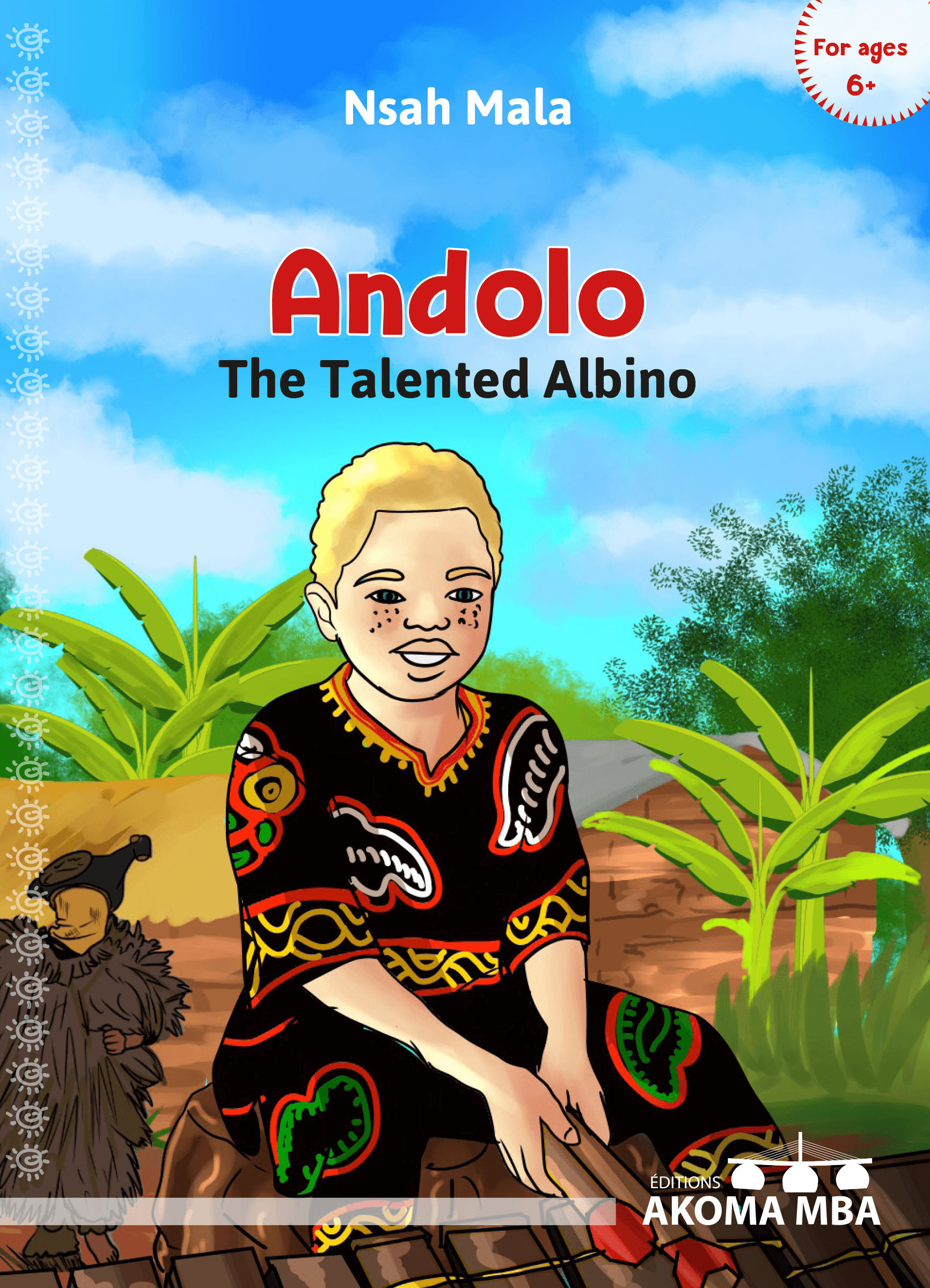
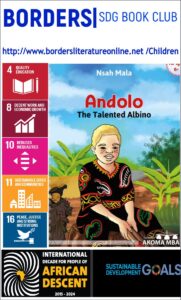
In September and October 2020, I had the good fortune of listening to a series of Borders SDG Book Club Zoom sessions conducted by Olatoun Gabi-Williams interviewing guests focusing on the children’s book “Andolo, the Talented Albino” (published in English and French) which featured Nsah Mala as the author, and Akira Junior as the illustrator, as well as two young readers called Christabel Tuh and Ryan Nsom.

Throughout those discussions it was clear that both you Nsah, as the author, and Akira, as illustrator, address many social issues making sure that the lens is a genuinely tied to African experiences and not dictated  by international debates and agendas mostly  generated outside of Africa.

So, in this two part interview, Part I with author Nsah Mala and the upcoming Part II to be published on 1 May, 2021 in issue n. 8 with illustrator Akira Junior,  I ask the following questions.
 

Pina Piccolo: In creating the character of the multi-talented albino Andolo, a boy who is not only integrated in the society but is even the object of admiration for the bullies, you have drawn on the experience of some of your family members in Cameroon. Was that personal connection very important in your ability to create a character that rang true to life and was not simply an idealized, didactic tool? I ask this question because children are normally very sensitive to adults pulling the wool over their eyes… they are sophisticated in that respect in ways that we adults sometimes don’t acknowledge, so in a way they constitute a challenge at the level of the register and content of communication.


Nsah Mala: Absolutely, that personal connection was key in my ability to create the believable character of Andolo. I know what you mean: children readers do not like to be underestimated or talked down to. And one always has to be conscious of this in their selection of diction and content for children’s books.


Pina Piccolo: Given the vastness of the continent, the enormous diversity of experiences and traditions occurring in the different regions – in this case some being extremely hostile to albinos – did you factor in these differences when creating the character? I know the book was published in English and French,  did you envision the book as having readership all over the continent and outside of it? If so, did you keep in mind places that are extremely hostile to people with that condition?


Nsah Mala: I wrote the book from a Cameroonian perspective, more specifically from a Mbesa perspective because the Mbesa people have a very positive culture towards albinos, but I envisioned the book as having a continental and international readership for the reasons you just evoked. In Africa, as elsewhere, hostility towards and discrimination against albinos varies from kingdom to kingdom, ethnic community to ethnic community, country to country, and so forth. As I will tell you in a while, I had some parts of Africa which are extremely hostile to people with albinism in mind before, during and after writing the book.


Pina Piccolo: In crafting the story, how did you deal with, on one hand, building up the self-confidence of potential readers affected by the condition and, on the other, combating the lack of knowledge about albinism which leads to the stigmatization of albinos? Do you think the book would have been different if you wrote in Tanzania, for example?


Nsah Mala: My main goal in the book was to celebrate people with albinism, or (coincidentally to borrow from the 2020 World Albinism Day theme) to show that albinos are born to shine, thereby helping to raise the self-confidence of potential readers affected by albinism and to help other readers become more understanding, tolerant, inclusive, and loving towards all people with albinism.

Combatting the lack of knowledge about albinism is therefore addressed more implicitly in the book. And I will consider doing so more explicitly in subsequent editions of the book (e.g. through the back matter) or other related books…

Meanwhile, as I promised a while ago, it was mainly against the backdrop of being aware of certain parts of Africa which are extremely hostile to albinos that I wrote the book. In fact, I originally wanted to submit the story to a publisher in Tanzania, but because that publisher promised but never replied me on an earlier manuscript about something else, I decided to have “Andolo” published in Cameroon. Even in doing so, I still informed my Cameroonian publisher that I was struggling to find an East African co-publisher for the book. Fortunately, a high-profile person with albinism in Kenya has shown interest in the book and we are exploring some possible collaborative opportunities there. And to answer your question more directly, I would not have changed anything significant if I had the book published in Tanzania since I wanted to share the Cameroonian and Mbesa experience with others. But without doubt I would have written the book differently if I had conceived it based on some of horrible stories we often hear about people with albinism in some parts of the continent, especially in the east.


Pina Piccolo: How were you able to incorporate these two concerns (for the albino child and for the uninformed others) and still make the book fun to read? Do you find differences in writing books for adults and books for children in this respect? What do you think of graphic novels which incorporate the visual and the writing but are aimed at older audiences?


Nsah Mala: As I’ve already said above, my main focus was on celebrating the albino child, and the aspect of educating the uninformed others then flew in more or less naturally. I guess that if I had wanted to pursue those two goals on the same footing, there would have been a risk of didacticism taking over the story. I don’t think that there is any big difference between writing books for adults and books for children in this respect: focusing on characters and plot, at least for me, leads to compelling stories and helps to avoid the risk of too much didacticism which comes with a focus on wanting to teach (not only tell) more than show. Besides, children’s books are often bought by adults who also read them, and some children also read adult books. So, in the end there seems to be no literature for a particular age group. And this opinion of mine extends to graphic novels and comics as well.


Pina Piccolo: You are a poet normally writing for adults. How was your experience of writing a book in verse for children different from your standard experience of writing poems? Did you have a visual component in mind even as you wrote the verses? Were you able to convey it and share it with the illustrator?


Nsah Mala: The major challenge for me was selecting appropriate vocabulary for children without talking down on them. Of course, visualization was a major component of the writing process, as it is for any book meant to be illustrated. Yes, I shared some of my visualizations with the illustrator, but Akira’s creativity still shone through as well as the impressive input from my publisher Éditions Akoma Mba. And I’m glad that our collaboration paid off with a good book.
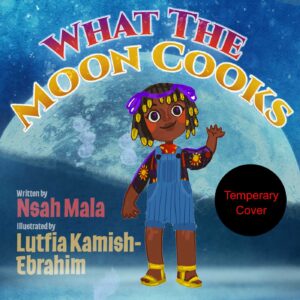
 

Pina Piccolo: You have written other children books including “Le petit Gabriel commence à lire” published in France by Éditions Stellamaris, “Little Gabriel Starts to Read” published by Spears Books in the USA, and a forthcoming one titled “What the Moon Cooks” which has been acquired by POW! Kids Books in the USA. Given that “Andolo” addresses a particular experience of disability and has more direct educational goals, a more explicit ‘mission’ let’s say. Did you go through a different process in conceiving it? How did you manage to incorporate the playful elements that would make it attractive to a child? Have you had feedback from readers, teachers, families?


Nsah Mala: The process of conceiving the book was not so different from that of other books, except that much of its inspiration came from known persons with albinism in my families and community of Mbesa Kingdom. While the book has implicit educational goals, according to me, the playful elements and humor were absolutely necessary in order to make it more entertaining, than didactic, to both children and adults. And I am happy to learn from people like you that I succeeded with that. So far, I have received tremendously positive feedback from kids, parents, reviewers, book clubs, and so forth.  For example, two Cameroonian newspapers – L’Anecdote and The Guardian Post – have published heart-warming reviews of “Andolo” in French and English respectively.


Pina Piccolo: Given that African demographics are greatly skewed towards young people (compared to let’s say Europe, North America, or Asian countries like Japan), how does that translate for writers in envisioning their potential readers, how does it affect writing styles, themes, languages used?


Nsah Mala: Your observation about African demographics is apt. And this implies that there is a huge market for books aimed at young people in Africa on the condition that our publishing industries become sufficiently vibrant and that more and more people, especially the youth, develop an appetite for reading which goes beyond reading only prescribed books on educational booklists. Definitely, when writing for young audiences, from board books through picture books and middle grade to young adult (YA) fiction and everything between, specific aspects of style as well certain themes can be particularly appropriate. Afterall, what shall a writer profit if their work is neither accessible nor appealing to their target audience? Of course, the dominant languages of writing on the African continent are still colonial languages such as English, French, Portuguese, and Spanish, but in order to tap from our growing demographic potential and also foreground Africa’s cultural and linguistic diversities, it is important to also write in African indigenous languages (as I sometimes do in my native Mbesa). Moreover, there is scholarly evidence that children who start learning and reading in their mother tongues often do better than those who start in foreign languages.


Pina Piccolo: Writing a children’s book gives you the opportunity to reach an audience that can be more influenced towards change, compared to an adult audience. What do you think are some of the specific responsibilities of writers in this respect?


Nsah Mala: On the contrary, I think that literature has a huge propensity to influence people towards change, both adult and kid literature. This is particularly the case when it comes to environmental literature (the object of my current doctoral research) for instance. However, I agree with you that children are more susceptible to be being influenced by books than adults. Consequently, writers for children have the utmost responsibility of striving to handle all themes in ways that must lead to more positive, tolerant and inclusive behavioral changes among kids.


Pina Piccolo: Generally speaking, what are some of the challenges and satisfactions of maintaining an outlook centered on African issues and still being able to reach audiences outside the continent or in the diaspora? Who are your models in achieving that balance? What are some of the debates going on among Africa-based African writers and visual artists on the issue of creating art works generated by genuine African experiences in a world that is increasingly globalized?


Nsah Mala: A very good question, Pina. Personally, I think it is both normal and natural for African writers and artists to ensure that we address our issues according to our own desires and tastes, and not in order to respect Euro-American agendas and expectations of us. It is our duty to represent ourselves and engage with our issues in ways that are relevant to us, thereby bringing our own quota to international debates and agendas as active participants. In terms of satisfaction, I feel fulfilled when contributing to African voices in global conversations. Regarding challenges, the most obvious is the Euro-American gatekeeping we all know about in the publishing industry. It is often very difficult to find western publishers for our work when it does not fit their (oft stereotypical) expectations of the African continent. In terms of models, I have many, including Chinua Achebe, Ngugi wa Thiong’o’, Wole Soyinka, Babila Mutia, Mongo Beti, Imbolo Mbue, to name but a few. While there are substantial discussions and events in Africa about literary fiction, it seems to me that very few of such opportunities exist in the areas of writer-visual-artist or writer-illustrator collaborations. My hope and prayer are that (more) platforms should emerge to fill this gap.
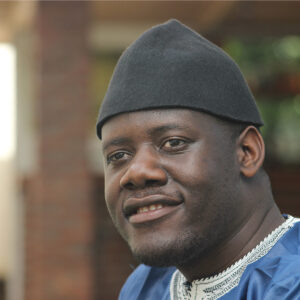


Nsah Mala is a poet and writer from Mbesa, Cameroon. He writes in Iteanghe-a-Mbesa, English, and French. He has published five poetry collections: Chaining Freedom, Bites of Insanity, If You Must Fall Bush, CONSTIMOCRAZY: Malafricanising Democracy, and Les Pleurs du mal (French). In 2016, he won the Ministry of Arts and Culture Short Story Prize in Cameroon and le Prix Littéraire Malraux in France in 2017. As a writer for children, his published picture books include: Andolo – the Talented Albino (English), Andolo – l’albinos talentueux (French), and Le petit Gabriel commence à lire (French). He translated the picture book Be a Coronavirus Fighter (Yeehoo Press) into French as Un Combattant du Coronavirus in March 2020. Nsah Mala’s picture book, What the Moon Cooks, will be published in spring 2021 by POW! Kids Books (USA).


Tags: AfricaAkira Junioralbinismalbino childAndoloBorders SDG Book ClubCamerroncelebrationcharacterschildren's booksdidacticismEast AfricaÉditions Akoma MbaMbesaNsah MalaOlatoun Gabi-Williamspersecution of albinosPina Piccoloplurilingualismregional differencesself-confidencethe Talented Albinoverse
Next Post
In Memoriam Lawrence Ferlinghetti – Three poems: Pity the Nation, Cries of Animals Dying, The History of the Airplane

In Memoriam Lawrence Ferlinghetti - Three poems: Pity the Nation, Cries of Animals Dying, The History of the Airplane

Comments 1

  1. Pingback: "Andolo, the Talented Albino", an interview with author Nsah Mala | One Global Voice

The Dreaming Machine

Writing and visual arts from the world.

Overturning planes in the labyrinth – Four poems by Rita Degli Esposti
Out of bounds

A song of peace and other poems by Julio Monteiro Martins

Translated from Italian by Don Stang and Helen Wickes Cover art: Boris Yeghiazaryan "Crimea. Seashore in a fog" 2021, courtesy ...

May 6, 2023
“In Terms of You, Homeland” and other poems by Mohamed Chouchane
Poetry

“While we eat away at the remains of the future” – Poems by Nenad Šaponja

    We Are Where We Are In the depths of sleep, I dreamt of somebody else’s unspoken words. I ...

November 29, 2019
Excerpts from Alessandro Brusa’s poetry collection “L’amore dei lupi” (Perrone 2021)
Poetry

Excerpts from Alessandro Brusa’s poetry collection “L’amore dei lupi” (Perrone 2021)

You are like a cloud                on the land that is sand to me             ...

May 2, 2021
Let the Rivers Speak! – Lucia Cupertino and the Poetry of the Global Souths, by  Pina Piccolo
Out of bounds

Excerpts from “In What Light Will They Fall?” – Gabriele Galloni

Excerpt from Antonio Bux’s introduction to Gabriele Galloni's collection In che luce cadranno?   The prayers and short rituals contained in ...

May 16, 2022
Everything Moves and Everything Is About Relationships. Susan Aberg Interviews Painter Louise Victor
Interviews and reviews

Everything Moves and Everything Is About Relationships. Susan Aberg Interviews Painter Louise Victor

    Born in Chicago, Louise Victor received her Bachelor’s Degree from Northern Illinois University in 1973 and her Master’s ...

April 15, 2023

Latest

Waiting for Palms. A conversation with Peter Ydeen – Camilla Boemio

WAITING FOR PALMS, Peter Ydeen at Lisi Gallery in Rome, through December 19

December 4, 2025
Like a Dream Spinning Out of Control – Poems by Nina Sadeghi

In memoriam: Elsa Mathews

December 3, 2025
(Their) STORY (is Ours) – séamas carraher

Movement Class at the Holistic Institute – Carolyn Miller

December 2, 2025
SKY – Julio Monteiro Martins

SKY – Julio Monteiro Martins

December 3, 2025

Follow Us

news

Waiting for Palms. A conversation with Peter Ydeen – Camilla Boemio
News

WAITING FOR PALMS, Peter Ydeen at Lisi Gallery in Rome, through December 19

by Pina Piccolo
2 months ago
0

In this issue of The Dreaming Machine, an interview with the artist focusing on this exhibit, curated by Camilla Boemio,...

Read moreDetails
  • TABLE OF CONTENT
  • THE DREAMING MACHINE
  • CONTACT

© 2024 thedreamingmachine.com - Privacy policy - Cookie policy

No Result
View All Result
  • Home
  • Poetry
  • Fiction
  • Non Fiction
  • Interviews and reviews
  • Out of bounds
    • Poetry
    • Fiction
    • Intersections
  • THE DREAMING MACHINE
    • The dreaming machine n 17
    • The dreaming machine n 16
    • The dreaming machine n 15
    • The dreaming machine n 14
    • The dreaming machine n 13
    • The dreaming machine n 12
    • The dreaming machine n 11
    • The dreaming machine n 10
    • The dreaming machine n 9
    • The dreaming machine n 8
    • The dreaming machine n 7
    • The dreaming machine n 6
    • The dreaming machine n 5
    • The dreaming machine n 4
    • The dreaming machine n 3
    • The dreaming machine n 2
    • The dreaming machine n 1
  • TABLE OF CONTENTS
    • the dreaming machine – issue number 17
    • the dreaming machine – issue number 16
    • the dreaming machine – issue number 15
    • the dreaming machine – issue number 14
    • the dreaming machine – issue number 13
    • the dreaming machine – issue number 12
    • The dreaming machine – issue number 11
    • The dreaming machine – issue number 10
    • The dreaming machine – issue number 9
    • The dreaming machine – issue number 8
    • The dreaming machine – issue number 7
    • The dreaming machine – issue number 6
    • The dreaming machine – issue number 5
    • The dreaming machine – issue number 4
    • The dreaming machine – issue number 3
    • The dreaming machine – issue number 2
    • The dreaming machine – issue number 1
  • News
  • Contacts

© 2024 thedreamingmachine.com - Privacy policy - Cookie policy