


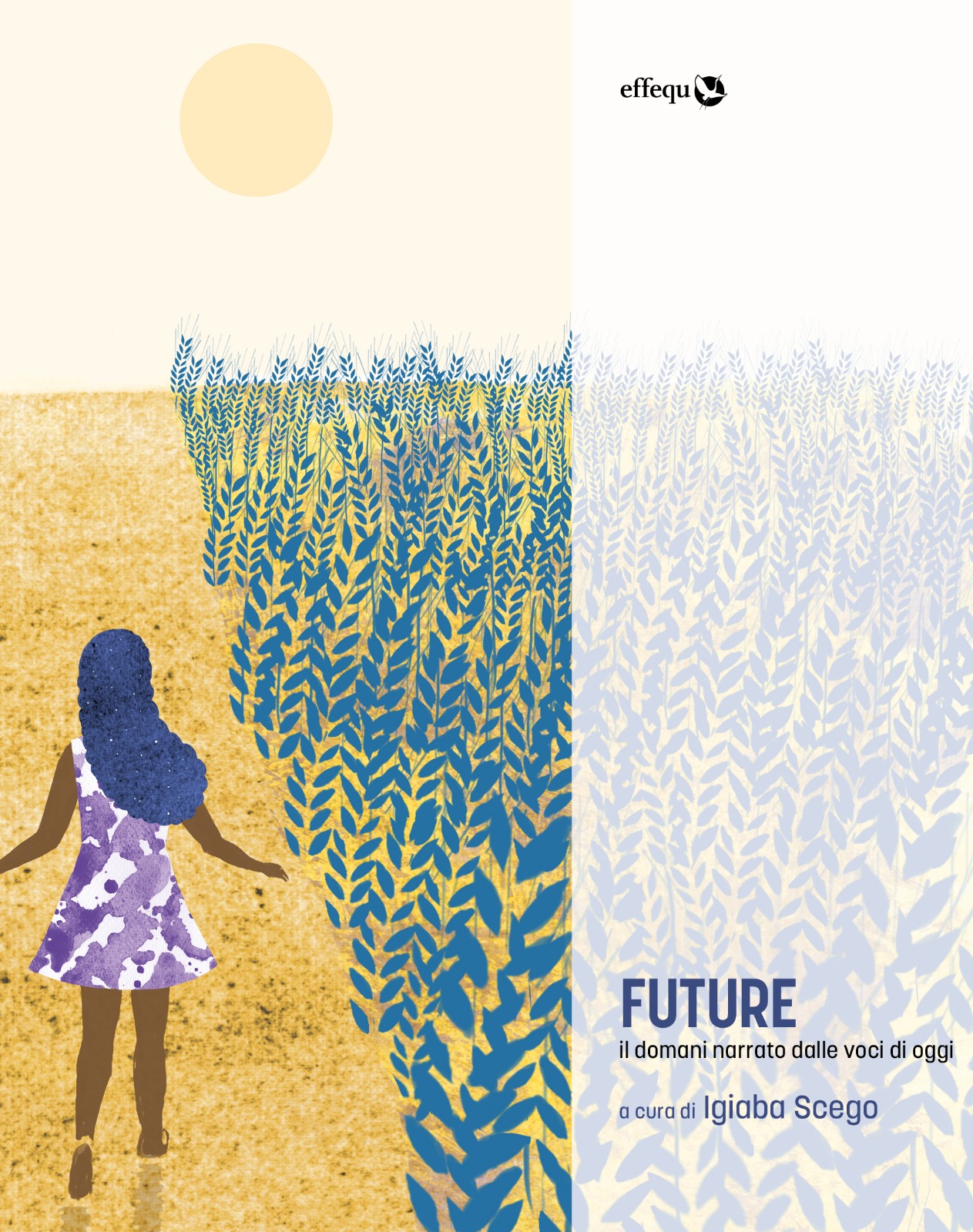
In 1975, Toni Morrison gave a speech at the University of Portland where she argued that artists and scholars have the responsibility to dismantle capitalist systems that profit from everyday violence against black people and share about the diversity of black realities that challenge statistics and “the single story”. Future opens with a quote from this speech:
“The function of racism, the very serious function of racism is distraction. It keeps you from doing your work. It keeps you explaining over and over again, your reason for being. Somebody says you have no language and so you spend 20 years proving that you do. Somebody says your head isn’t shaped properly so you have scientists working on the fact that it is. Somebody says that you have no art so you dredge that up. Somebody says that you have no kingdoms and so you dredge that up.”
Each of the 11 short stories in Future respond Toni’s Morrison’s imperative to artists and scholars by sharing in-depth narratives about or shaped by their experiences as self-identifying black womxn in Italy to combat systems of injustice. Each author explores how the political is personal, and vice versa, in Italy’s first published literary anthology by Black Italian women. As journalist Oiza Q. Obasuyi recently shared, Future, along with other initiatives such as DiverCity and events such as Il Bianco e nero, le parole per dirlo, are challenging the status quo in Italy. African descendants & Black Italians are building new spaces where their voices and experiences are at the center. In this book review, I discuss the ways in which the eleven authors explore and reimagine citizenship, belonging and homemaking.
Why Future? Why Now?
Future could not have come out during a more poignant time in Italy’s history. Italian activists and groups such as Italiani Senza Cittadinanza, Razzismo Brutta Storia, and Rete G2 are continuing the fight for citizenship started over 30 years ago, as youth aren’t even eligible to apply until they have turned 18 and checked all the requirements. The debate for ius culturae or ius soli is making slow progress. Italians born to parents outside of Italy or who moved to Italy are categorized and treated as foreigners in Italy, even if they have been living in the country for 15 years. The Mediteranean sea has become a space of trauma and death, as thousands of immigrants from Eritrea, Ethiopia, Somalia Syria and Pakistan have been denied humanity through xenophobic policies. Italy maintains corrupt relations with Libya to intervene and deport immigrants who seek opportunity across the sea. Colonial images of Black women and girls in Italy are still considered appropriate and profitable, such as the one with Sindaco Sala of Milan with a black girl crouched at his feet on the cover of Corriere della Sera, which have prompted outrage and responses by Black women to interrogate and deconstruct prejudices. While these are just a few examples, Future emphasizes the humanity of Black Italians, immigrants, refugees and all individuals at large who have systematically been devalued and denied their humanity at the expense of injustice and economic greed.
Igiaba Scego, editor of the anthology, introduces Future as a contemporary “J’accuse” that “publicly denounces power and injustice”. The preface by Camilla Hawthorne and afterword by Prisca Augustoni demonstrate how each of the short stories and mini-memoirs are part of a larger conversation about tackling unjust histories and foreseeing new futures across the African Diaspora. As Hawthorne shares, the stories also elaborate on various levels of two-ness, or double consciousness, that Black Italians, AfroItalians and African descendants experience in Italy. Similarly to Professor Hawthorne, while I grew up in the United States, have African American heritage and a blue passport, I, along with African Americans in general, have so much to learn from AfroItalian women and their perspectives. Since learning Italian in 2011, I have been drawn to learning more about the experiences of Black Italians, and the politics of living in a black body in the nation. From 2016-17, I researched how Italy’s racial and political history impacts the reception and promotion of businesses owned by African women and descendants in northern Italy. I also studied racial politics and explored language to describe privilege in Italy. Future is the book that I have been waiting for since learning Italian nearly 9 years ago, as it challenges the “white gaze” in storytelling and publishing in Italy. Each of the stories in the contemporary “J’accuse” echoes current conversations in Italy (and also throughout the Diaspora) about the opportunities, challenges, hopes and fears of living in a black body, especially in regard to race, gender, citizenship, homemaking, and mental health in Italy.
How might the historical and contemporary anxieties about race be experienced amongst Black Italians?
Earlier this summer, Alitalia released a promotional video of a white man in blackface posing as Barack Obama. The video echoed Silvio Berlusconi’s derogatory comments about Obama as his tanned friend in 2009. As Giuliani and Lombardi-Diop argue in Bianco e nero. Storia dell’identita` razziale degli italiani, Berlusconi’s comment exemplified a larger institutional issue of self-reflexive colorblindness (Angelica Pesarini shares more about this in her speech at NYU Florence) and justified that his skin is “normal”, without saying white, in reference to Obama’s dark skin. Color in Italy is often described in juxtaposition to darkness, usually without giving a name to the white skin.
However, whiteness and racism are not new phenomenona catapulted by recent immigration (Pina Piccolo and Camilla Hawthorne unpack meticciato and its role in Italy’s racial history). In Angelica Pesarini’s story Non s’intravede speranza alcuna, Maddalena, a young mixed woman is abandoned by her Italian sponsor and suffers the violence of the Italian state-run orphanage system in Eritrea. Viewed as an illegitimate child of the state, her narrative is never her own and always the subject of state-run offices (Pesarini further analyzes the racialization and materialization of the black body in Italy’s colonies). Through each of the letters that share the fate of Maddalena, opacity marks the layer of violence expressed and unknown to the reader. Even today, black and brown children are considered to be illegitimate and threatening to continuing the legacy of the Italian nation-state (Addes Tesfamariam analyzes the Italian’s government’s obsession with legitimate, white children as new generation of Italians through the Fertility Day Campaign).
Political anxieties about blackness often focus on contamination of a population. Marie Moise’s searched to understand the secrets and pains of her family in Haiti and Italy in Abbiamo pianto un fiume di risate. In her family, as well as in Italy, whiteness is never directly addressed but articulated through self-reflexive means of normality. Moise writes “There is white normalness and its opposite. The opposite of normality is not simply abnormality… The opposite of white normality is failure” (p.41). The burden of this weight impacts how her Haitian Italian father sees himself in the world and his relationship with his daughter. In fact, the effects of the one drop rule, or one drop of blackness contaminating a pure white lineage, brought upon shame, trauma and anger between her father and herself in different ways. As Moise writes, “with one drop of [black] blood, I inherited an entire history of disgrace and madness”. While Moise’s story is her own, along with her journey to freedom and truth, blackness as a burden and contamination to be expelled is prevalent in other stories such as Lamiere by Esperance H. Ripanti.
Ripanti looks to 2039 and imagines a more stark, fascist and nazi history taking place if social and political narratives about blacks and immigrants do not change. The protagonist of the story is living in the midst of the 2010s, when rampant murders and attacks against blacks and African immigrants took place across the nation (La Macchina Sognante published the video Pronunciate i loro nomi/Say their names in 2017, which summarizes documented murders and attacks pre-2018). Murders and attacks against Idi Diene, Assane Diallo, Konate Bouyagui and Ibrahim Manneh, along with racial slurs begin to evoke both fear and complacency in the protagonist. As a racially ambiguous individual, black enough to be called racial slurs yet light-skinned enough to not feel threatened, he encourages his girlfriend to consider that “maybe they will find a way to live better”. Nonetheless, she challenges him to consider that’s not possible, as his mother, his mother’s boyfriend Gustav and younger brother are dark skinned and risk getting killed (203). Even after witnessing the kidnapping of Gustav and other attacks and murders against African descendants, he changes his perception and interaction with the world around him. However, through the protagonist’s experience and development, Ripanti appears to warn us that complacency and inaction will only encourage individuals to continue living in fear, rather than addressing political, social and economic injustices.
How might debates and practices about citizenship be articulated amongst Black Italians?
While the question of citizenship remains a larger political question in Italy, Italians born to immigrants are still expected to prove their cultural heritage and belonging to other nations except Italy. These questions often take the form of “ma come mai parli l’italiano così bene?”, or “da dove vieni?” When the respondent answers that they speak Italian because they grew up in Italy, or that they are from Italy, the asker will typically press for response about their connection to a nation besides Italy (Black History Month Florence unpacked the issues of this question in 3 interviews). In Che ne sarà dei biscotti, Wii uses the analogy of making cookies to explore the absurdity of the question “where are you from?”, which confines a person to a particular place and traditions, often in a prejudiced way. Instead, Wii uses the metaphor of making cookies to recognize the full humanity of individuals instead of devaluing them. Ultimately, Wii encourages readers to consider the harmful ways immigrants and children of immigrants are expected to confine themselves to a single story and that this type of perspective is further justified through legal measures.
In Eppure c’era un odore di pioggia, Matimba, the protagonist of the story, is regularly interrogated about her background through insults and othering statements about her body. Herero writes, “Her skin said that Africa was her home, and her blue passport and blue stay permit confirmed it: Capeverdian, arrived on May 21, 1984. In reality, that was the date she was born, as being born is a bit like arriving. If you can arrive you can always go” (153). While Africa was viewed to be Matimba’s home, she had lived in Italy for nearly all her life and felt as if she was returning home to Rome. However, not only her documents demonstrate that she’s categorized as a foreigner. As a child, other children bully her with the insult negro, and she receives zero support from nuns and other adult figures. As an adult at the airport security check, she’s humiliated by the guard by being called a woman since she has a beard. The facial recognition system did not even recognize her skin as it’s considered too dark. Even the narrator asks, “Again this question: until when will our existences be considered illegitimate?” Matimba seeks legitimacy through her intimate relationships, such as with Manal and her daughter Maya. Herero explores the complex relationship between citizenship and belonging, and how a society regularly ostracizes individuals based on their appearance, skin color, and documents. Through Matimba, Herero explores how a woman is constantly socially othered and through her legal status in a nation where she does fit the box of a normal skin tone, or white.
How do you (re)build a home and belonging?
How do members of the diaspora build home? When your family’s heritage crosses borders (and borders have crossed them), or when your family members live in other countries, how do you keep their memory alive? In Tina Campt’s article “Blackness, Diaspora, and the Afro-German Subject”, she argues that homemaking and belonging are emplaced on the member of the Diaspora, typically though practices and rituals at sites and within communities (Campt, 73). In Leila El Houssi’s L’incanto della memoria, the author shares about the spirituality and rituals performed by her grandparents to build dwelling and community in Italy from Tunisia.
Compared to El Houssi’s story, other authors demonstrate how they build home within themselves so they can build community with others. Djarah Kan takes readers through how she had to build home through herself in Il mio nome. When her wealthy aunt visits her family from Accra as a young girl, she learns the power of her name and its roots to her family’s lineage. By learning that there’s more to her name than the anglicized one, she realizes that she has a greater power over how she sees herself than how Italians and Europeans may see her as a black girl. Accepting this truth within herself appears to be a catalyst for battling daily micro and macro-aggressions and building her path in Italy.
Similarly, Addes Tesmafariam explores the various levels of double consciousness while living in Italy and in Holland through processes of emplacement in La Maratona Continua. In Italy, she describes herself as a woman in a sea of many, yet different due to her black skin. While the Dutch view her as a recently arrived refugee like the ones they see on the news, Tesfamariam sees herself as an expat, yet struggles to leverage her identity as a Black Italian woman from Milan with a Milanese accent. Ultimately, her experience brings her closer to the Eritrean community in their city of Tilburg. She writes, “compared to my situation, many of the new folks weren’t escaping cities like Milan but a dictatorship.” Tesfamariam guides readers through these levels of consciousness that ultimately consist of her experience of homemaking and community building in Tilburg. While she was able to note the differences between her experiences and those of the local Eritrean community, she re-explored her roots and sense of belonging through sites of juxtaposition.
Some authors incorporate the importance of photos to show their connectedness to their local and extended communities. Specifically, aspects of both Lucia Ghebreghiorges and Laeticia Ouedraogo’s stories exemplify diasporic homemaking, which consists of practices “crucial to diasporic formation yet frequently papered over by an emphasis on diasporic mobility” (Campt, 75). Through photographs, protagonists and individuals are able to perform intimacy and homelife. In Nassan Tenga, Ouedraogo shares that photographs of her father allowed her to establish an intimacy with him despite his physical and emotional absence. Until she could regularly view her photos of her cousins photos on social media, she cherished opportunities to see artifacts of their lives. Similarly in Zeta, Lucia Ghebreghiorges revisits photos of her life in Addis Ababa. For example, one photo of her and her parents right after she was adopted from the orphanage prompts her to think about the little information she knows about her heritage. As an adult, she realized that she’s kept those worlds separate from each other and expresses a yearning to be her authentic self. Revisiting memories and reshaping sense of belonging through images address layers of identity, belonging, and also taking care of one’s mental health.
Mental health within Black and African communities at-large remains a topic that needs to be addressed. In Abbiamo pianto un fiume di risate, Marie Moise takes readers through how violence shaped her family’s history to Haiti through slavery and then more recently fleeing dictatorship to Italy. In the short story, reactions to violence manifested within her psyche and her father’s and contributed to gaps about her family’s history and ultimately about herself. To put a name to the wounds, Moise begins her own process of healing and freedom by experiencing her family’s past by visiting Port-au-prince for the first time with her father in community of relatives, friends and neighbors.
Similarly, in Nassan Tenga, Ouedraogo shares about the loud silence of systematic oppression impacted the overall being of her parents, herself and her brother in their household. Her parent’s well-being materializes into assets and status symbols, such as building a vacation home in Burkina Faso. Silence about the psychological effects of racism is not limited to the family and the home. There are few safe spaces that exist, as she faces racist acts also at the psychologist’s office and at school. “Your mother shouldn’t make herself a victim, as this is a condition that can hinder her integration”, the psychologist shares with Ouedraogo (p. 111). Or instructors demonstrate to their students of non-white cultures that they wouldn’t be able to go beyond the Italian education system (p.113). Community and resilience are the keys to building the futures that youth like Ouedraogo actively participate in and foresee, by getting degrees across disciplines so their perspectives and experiences are represented and seeking new opportunities in different countries.
In La Veglia dell’Ultimo Anno, Ndack Mbaye takes readers through experiencing the death of Gainde, or Lion, her one-year old cousin in Senegal, on New Years Eve. While Mbaye acknowledges the irony of losing life on the last day of the year, she also shares how both she and her family deal with the death. Mbaye takes readers through her and her family’s journey of realizing that life moves on after someone dies. Compared to Catholic processes of mourning and celebrating lives of passed loved ones in Italy, Mbaye’s family’s experience is also uniquely Italian.
When will the humanity of Black Italians, and immigrants and Italians who do not have “normal”, or white skin”, be fully recognized as human and members of Italian society? What actions and values need to be in place for that to exist? As Camilla Hawthorne in her speech at the event “Il bianco e nero, le parole per dirlo”, in Italy, AfroItalians cannot breathe. However, the values within the 11 stories indicate possibilities of nation that allows all of its citizens to breathe. Ijeoma Oluo recently wrote in The Guardian about the fatigues of dismantling white supremacy and speaking out because “there are people of color in the room who need to hear that they shouldn’t have to carry the burden of racial oppression, while those who benefit from that same oppression expect anti-racism efforts to meet their needs first”. Future is that book for Black Italians and children of immigrants to help them realize that they don’t have to carry that burden, while also encouraging white Italians, especially those active in anti-racist efforts to do the necessary work of recognizing institutional colorblindness in Italy before talking about anti-racism without mentioning race. Future represents a window into the diversity of Black Italian women’s experiences, and encourages its readers to not only listen, but also act on what is right and just to dismantle an unjust system that has thrived at the expense of excluding others.
Candice Whitney is a researcher, writer and international education professional based in New York City. In 2016-17 as a Fulbright Scholar, she conducted research on how the historical and political processes that shape Italy’s contemporary relationship with African countries impact the promotion of products and business relations amongst African women entrepreneurs in Italy. Candice received her Bachelors of Art in Anthropology and Italian from Mount Holyoke College. More about Candice’s work can be found on her blog.


Comments 1