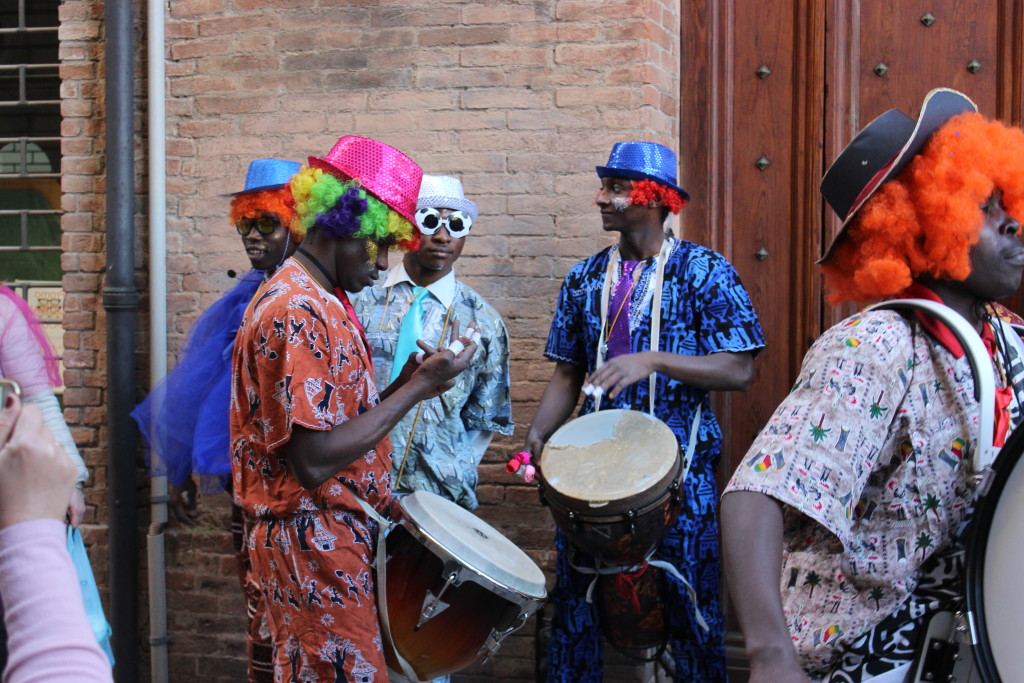
Cover art by Giovanni Berton. Readers can access the poems of the first of the featured imaginary poets ‘Maryam Boyaciyan’ here.
These ‘biographies’ serve as a backdrop for the series of poems by ‘imagined poets’ that will be presented over several issues of the journal, starting in the present one, with the work of Maryam Boyaciyan, in the Poetry section.
The Stony Guests
Boghos Üryanzade
The single extant photograph of Boghos Üryanzade shows a man uneasy in the dark suit draped over his shoulders, eager to be out of the studio and out into the fresh air. It is said he worked as a stevedore, porter, pimp and tattooist in every post of the republic. Born into a Turkish speaking Greek-Armenian family in the city of Kars he walked barefoot to Ankara to join his older brothers in a soot-stained building near the parliament of the new state. From there he ventured to Izmir where he learned how to wield the tattooist’s knife and to speak rudimentary French from the European sailors who came to him to be decorated. The last we hear of him is as a porter, ferrying clients from the quays of Eminönü to plush hotels in Galata and, it is rumoured, possibly running guns for Dashnak. Only a handful of his poems survive, we have no idea when and how he wrote them but we must be content to imagine him sitting with a glass of tea in an early morning teahouse willing his roughly bitten pencil to crawl over the blotting paper he had bought from Ahmet Effendi’s huckster shop. “The Envoy Returns”, the most notable thing in his tiny oeuvre, displays a deep imagination and yearning for lands and peoples the poet knows he will never see.
Maryam Boyaciyan
was born in that warren of streets known as Tatvala as the Empire staggered and stumbled. Sometime in the late 1890’s her father abandoned his native city of Van and tramped the length of Anatolia until he came to Kasımpaşa, that shy neighbourhood that lies directly across the water from oldest part of the Polis, and there he began hauling sacks of low-grade coal up and down its streets. The cliché of the peasant working his way from rural poverty to urban riches only half applies in the case of Arto Boyaciyan. There was not a single soul in those days who doubted his capacity and appetite for hard physical work but whispers of a lost will and a hastily dispatched old Greek woman in the then sleepy village of Ortaköy became enmeshed, sometime before the old century ended, in the syllables of his name. As death and catastrophe stalked the Empire the Hamidian Police were unable, for a myriad of reasons, to pin anything on him. And so, despite the semi-darkness that enshrouded the name, middle-class salons and mores beckoned. Marriage to the daughter of a Beyoğlu confectioner produced two striking looking children: the dark haired, blue eyed Danyal and the light skinned, smiling Maryam, who, after an uneventful childhood, decided to leave the school for young ladies she had been attending in Harbiye -an institution to which her mother had attached the greatest importance- in 1918, in order to travel to Russia to take part in the new society that was being ushered into existence there. Needless to say, the lack of passport and anything resembling money, coupled with the fierce will of a father with a secret hanging over him put a swift end to any dream she may have entertained. Instead she was encouraged to take lessons in the relatively new art of photography. This, it was hoped, would keep her mind from all things Russian. And seemingly it did. However, it quickly took on the proportions of an obsession and there was not a single soul in the newly built apartment block the family moved into in Kadıköy that was not cajoled into posing for her. At nights, when only a few lights from ships twinkled on the Sea of Marmara she would read the poetry of Akhmatova and Blok and translate them into Armenian and Turkish from the shaky French versions published in a journal in Lyons she had delivered to her door every month. This she kept as a closely guarded secret.
In 1929, with a modest sum her father handed to her one fine February morning, she opened the small photography studio that she was to run single-handedly until she pulled down the shutters for the last time in 1971. In her tiny cave, close to old post office in Moda, Maryam photographed almost every Armenian, Jewish, Bulgarian and Greek family and, as their era drew to an end they were replaced by emigrants from Anatolian, who were often unsure of where to put their hands as she asked them to relax and smile for the camera. Such was the care and trust she radiated that lovers would come to have their photographs secretly taken. Boys held boyfriends’ hands, girls draped themselves around girls and the bolder posed naked. All knew that Maryam would never breath a word of what on behind the felt curtains.
Not one of them suspected that, over tea and cheap cigarettes, Maryam would feverishly write poems in Armenian, the language of her childhood. The mere idea of a woman writing love poetry struck her as mildly scandalous and so every poem was locked away with a cache of her more illicit pictures and the letters an admirer in Sinop had written to her in 1933. Not until a French-speaking Russian poet from Astrakhan happened to stroll into her studio in late 1952 and mention how he had sat with Akhmatova in her various Petersburg homes over the long years of the Bolsheviks, the Terror and the Siege did something snap inside her and quietly, so quietly she asked her customer to elucidate further; something he was only too willing to do. Maryam shut the shop and set a small flame under the samovar and listened to the heavily accented-French of Timur Makhmadov tell her of snow, revolution, stale bread, fear and the lines that, over the years, dug slowly but surely into Anna’s face. Moved beyond anything she had words for, she stood up and pulled the dossier containing her poems out of the drawer and dropped it onto the lap of the chattering Russian. “And these, these are my little creations”, she smiled, blood racing in the veins of her neck. “That I cannot hope to read”, smiled Makhmadov. So shyly she began translating them into her imperfect French, all the time watching the reaction of her strange guest who, after the fourth poem, asked if he could have the poems copied to bring to friends in Yerevan, stammering: “Even in your High School Constantinople French they are striking, deep as the sorrow of your people”. The volume was issued in 1954 in the Armenian SSR and went into five editions in two years. However, Maryam told nobody, indeed she never spoke of it at all. Once the volume was issued, it seems, Maryam abandoned the writing of poetry and bought a lapdog to accompany her on her walks on the Moda shore. Among the vast treasure of her photographic archive a single copy of “My Land is Laid Low; Here I am at Your Door” was found. A few poems were translated into Turkish and for a week or so Maryam became the toast of literary Istanbul. Then she was forgotten again until Makhmadov knocked on my door last night and related all this. I now present it to you, dear reader.
The Pseudo-Melkon
Of all the pen names found in the journals of the 1930’s none is as preposterous as that of “The Pseudo-Melkon”. No trace of a person who once lived and breathed is to be found behind this mask. Whatever trails might be pursued lead the pursuer into mere fiction. All that is known is that the poet wrote in a Turkish mostly free of traces of the Ottoman idiom that had yet to be purged from the verse of his contemporaries. There is also an ironic tone that seems slightly ahead of its time. One wonders what the lover to whom his best poem, “The Sublime”, is addressed thought of the confession, which smacks of a husband guilty of ignoring his wife’s needs as he chases after grand aesthetic theories and notions. Or perhaps the poet was a woman playing with the conventions of the age. The thought too strikes one that there never was a lover at all and that The Pseudo-Melkon sat in dusty beerhalls writing these things alone, merely to keep his hand in. Sadly, we will never know. Yet, in these few lines the voice of this unlikely poet still rings out.
Siran Bakırcı
The two volumes Siran Bakırcı published in the early fifties are almost impossible to find now. The printer and publisher, Serhii Hadjiandreas, witnessed his premises being burned to the ground during the pogrom of 6-7 September, 1955. Everything, including the type for Bakırcı’s two collections were totally destroyed. While there are certainly copies lying about in various houses throughout the great city they rarely turn up in second-hand bookshops. Mine were tracked down and sent from Alexandropoli and Burgas, where friends had been scouring through archives on my behalf. Bakırcı was, as the few reports of her attest, a formidable intellect, capable of incisive and witty conversation in Greek, Turkish, English and French. It is said she wrote an exhaustive study of Nazım Hikmet’s first book 835 Lines, and sent it to the poet as he languished in Bursa prison. However, it has never surfaced and there is nothing in Nazım’s letters to indicate he ever received the manuscript. The notoriously camera shy Bakırcı left not a single photograph behind. Her only relative is an old blind musician living on the outskirts of Athens who speaks of her love of dance, blue eyes, the Greek of Fener, tango and the silence that falls on the city once the call to prayer has ceased. None of these things made it into her verse.
Sait B. Karakaya
In contrast, a little more is known of Sait Bünyamin Karakaya, born in Bartın on the west coast of the Turkish Black Sea in 1902. In the photographs of him that have come down to us, the viewer is struck by the large mop of almost shockingly blonde hair and his steely cold gaze. In 1920 he fled Bartın for Ankara in order to play his part in liberating Anatolia from the Greek invader and, just as the tide was about to turn in favour of the ragged army of Mustafa Kemal, he was injured in a skirmish near Eskişehir. At first the wound he received to his left hand did not seem very serious but it soon turned septic and he was informed by a surgeon who had spent the greater part of his life in Bosnia that he would lose it, but that, otherwise, he would make a full recovery. On the declaration of the Republic, nursing his stump in overly-long jacket sleeves he attended teacher training college and within a few short years he found himself drifting from teaching post to teaching post in a series in cities across Anatolia: Tokat, Kütahya, Burdur, Mardin and Kastamonu. In the quiet steppe evenings, he devoured the classics of Russian and French literature and trained his pen to write short stories based closely on what he had gleaned from Daudet, Chekhov and Maupassant. While they were well written, it seems, they lacked any insight and struggled to focus on the epiphanic moment on which the fate of a good short story often depends. He writes bitterly from Kütahya to his brother Ercüment in Bartın that: “no magazine has yet deigned to publish a single word of mine; no editor has deigned to dash off a few lines of encouragement. I am, I feel, simply wasting my time at this. But then again, here in the steppes I have an enormous amount of time to waste”. In the following months and years, the short stories were given up in favour of backgammon, tobacco, strong tea and the study of Ancient Greek. This new passion, it seems, came from a desire to understand the past of the land for which he had given up a hand and for which the Greeks had staked everything, and lost. During the winter of 1929, after the alphabet was changed by government decree he began to write what he termed “documentary poems” in the manner of old gravestone inscriptions in Greek and Ottoman that he found around him as he wandered from dusty town to deserted village. What is striking is that he produced a plain poetry that eerily echoed developments elsewhere. Yet, it was impossible that Karakay had even heard the names Ezra Pound or Konstantin Kavafis. Over the course of the early 1930’s he began to assemble a poetic history of the peoples of Asia Minor, but every experiment he produced was again rejected by publishers in Istanbul and Ankara. This time the rejections were accompanied by angry letters asking him not to waste their time with poems that had half of the words missing or were “the product of some rural madhouse, out in the God forsaken steppes. Products of someone totally ignorant of how poetry functions”. By 1934 he was convinced that he had no gift for any form of writing and sent his brother a small packet of the poems he thought might be worth keeping in the family home in Bartın. On the 3rd January 1935 Karakaya left Tokat to walk to Sivas and was never heard of again. In the 1950’s Ercüment Karakaya had his brother’s poems published in a handful of literary magazines where they were once again attacked as imitations of western modes. A chance meeting with the older Karakaya in the train station in Afyon led to a friendship which opened a door just enough to let a tiny chink of light fall on this page. We dedicate this essay to him.
Ohannes Sessizoğlu
I have decided to break all sorts of conventions and to offer my own biography. I have little trust in the methods and research skills of the editor. Upon hearing that he was assembling a collection of the poetry of what he presumptuously and somewhat preposterously, calls ‘The Stony Guests’, poets who have been buried in some “great anthology of forgetting”, I grew uneasy. For we, from where we currently dwell, do not quite see it in this manner. It was enough for us to have lived, to have experienced what we experienced and to have attempted to write it down. So what if our books are impossible to find, so what if nobody can remember our names, so what if the very language we wrote in has perished. This all seems from here to be hugely trivial. Yes, some of us were bent on making a name for ourselves and others had notions of leaving something precious to posterity. Yet as Sait B. Karakaya has attested, the words of even the most beloved poems are forgotten, are misremembered, are misspelt, are erased and, even worse, misunderstood. One lesson our generation learnt, (perhaps this is not an issue now, though it is difficult to understand from here, as getting what remains of my hands on a new journal is a tad difficult) is that words shed the skin of their meanings very quickly, and dress themselves up as something totally unrelated to the shape the reader expels from his or her mouth on a daily basis. How can you be sure the meaning, the aura, the feel and the texture of even the simplest words are the same now as when Homer, Sappho, Ó Rathaille, Goethe, Haşim or Akhmatova used them? Well, you can’t. A rose is a rose I hear you say. But is it? What if were a code word among medieval Bulgarian poets for the heady intoxication of love in Spring, what if it were a symbol of the unity of body and soul for Kurdish writers of song, what if it were a Serbian nod and wink for an uprising in the thirteenth month, and what if I told you the Ancient Welsh used it as a synonym for the seduction of young monks in the damp cold that comes down on a February morning? I have strayed from the goat path. What I am attempting to say is that we are not forgotten or neglected or anything as dramatic as that. We were read, we were left unread, we were quoted, we went unquoted, we were used and abused in love and hate and fumbling attempts at song. We were. The poems were one, but just one, way we were in the world. And, if you think hard enough on it, still are. The rest?
I was born in Feriköy to a family that spoke three languages at the same time. I chose Turkish and watched in fascination as the old language crumbled into the arms of the new. I wrote some poems, I left many more unwritten. That is all.
Anayiz Papazyan
Why would you need to enumerate the facts of my life? To show that they can be squeezed into a few inches of white paper? The grief I felt when my mother died during my fourteenth year? Is that a fact that should be included in this short biography? Which of my poems was lit up by the howls of a girl cut adrift in a household of males at the very age when she could approach her mother as a woman rather than a mere figure? Has any poem ever caught that? Perhaps not you stammer. Well, I can safely say now that none has. Or ever will. And yet we persist in writing them. The second great fact was the single journey I undertook, while still alive, from Mersin to Istanbul in carts, trains and busses. I remember swans descending on a lake, clouds dispersing over snow-stained hills, two men crouching by the railroad as the rain poured down, a flock of sheep untended on some plain and bare foot children selling yoghurt one frosty morning. These are facts, these are things of greater import than the men who abandoned me in cafes in Şişli and Beyoğlu, or students who turned away from the syllables of the Armenian language and the old age that crept into my bones in the winter of 1938. Of the pieces that were published in magazines long since forgotten, I tried to fill them with the silence that haunted our homes, the street corners where our teddy boys dwelt no more and the curled-up photographs of football teams erased from the history of their league. I wrote whenever I felt inclined, whenever the need would tap on my shoulder and grin into my face. “Ah, but you are still here”, it would say before fading away into the flowery paper that festooned our walls. I know, you do not need to breathe a word, I failed but for that I am very grateful.
Maryam Boyaciyan
The dolt of an editor has confused my story with that of another Maryam, one who ran a photography studio in Galatasaray. I was never involved in business of any sort, it would have been beneath our station. I met the Russian poet at a soiree in Moda and yes, I did entrust my poems to him and I am very glad I did. I do not for a second believe the editor was visited by Makhmadov, indeed I am also certain that he is not now among the living, though I have yet to hear of him on this, our side.
Nedim Baruh
All I will add is that I dislike brilliantine, never had anything to do with the greeting card business and certainly never posed as the Sultan of this realm. Whoever claims that I did has simply slandered me. Now that the editor seems to have disappeared I want to make a few things clear. This act of bringing us together as representatives of something that never existed smacks of mendacity. Yes, we dwelled in the cities of the new republic and wrote poems, some good, some bad and many more that were merely unremarkable, but our hands were turned to many other things: to work, love, children and to maintaining a sense of dignity in a land that did not always want us. Yes, we all drew breath at one point in our common human history. Of that have no doubt. Oh, you might think that none of us here really did and that were are all products of this editor’s poor imagination, or worse, that we are masks for his inability to grace the world with his own original work. No, none of this is true. I was born in 1889 in Kadıköy or Khalkedon as the ancients called it, of a relatively prosperous family who owned a series of music shops throughout the Polis. We sold pianos to the emerging middle class, we sold sheet music to myopic music teachers who spoke French with a strong Italian accent, we sold tanbur, ney and kanun to hesitant second sons and independent-minded daughters, we sold phonographic records to spinsters who demanded to listen to them before they parted with their money. We saw snooty noses cocked at quarter-tones, we saw gullible girls lost in the bland choruses of some cheap operetta, we saw the city split into camps that, while they have moved about, have yet to sit down at the one table and work out how to live together. Did I include this in my poetry? No, I certainly did not, caught up as I was in the currents and drifts of the changes that engulfed us in those years. I took refuge in love and serenade and the softer tones of chamber music. The wails and cries of the crowds outside remained just where they were: outside. Does that render every word I wrote obsolete? I think that it doesn’t. You have the record of one who lived but who preferred, perhaps, not to see. Can art not soothe; cannot it not provide a harbour of peace in times of great uncertainty? Greater artists than us spent their entire writing lives chasing after the echo of one single word: huzur; the inner peace that comes when everything is in place, when everything is as it should be. But bear in mind how difficult it is to define something a slippery as this. Sic transit gloria, it passed without ever being on nodding terms with glory or her attendant handmaids.
It does seem the editor has absconded, perhaps his shyness got the better of him again. Perhaps it’s for the best if I pull down the shutters and let us all ramble off through the night.
Neil P. Doherty is a translator, born in Dublin, Ireland in 1972 who has resided in Istanbul since 1995. He currently teaches in Bilgi University. He is a freelance translator of both Turkish and Irish poetry. In 2017 he was one of the editors of Turkish Poetry Today, which was published in the U.K by Red Hand Books. His translations have appeared in Poetry Wales, The Dreaming Machine, The Honest Ulsterman, Turkish Poetry Today, Arter (İstanbul), Advaitam Speaks, The Seattle Star, The Antonym, The Enchanting Verses and The Berlin Quarterly. He is currently working on volumes of poetry by Gonca Özmen and Behçet Necatigil.